

Step 1 – Essentials for Buying Property in Spain
Required Documents to Begin Your Purchase
To launch your property search efficiently, we need the following documents:
-
Buyers’ Passport and National ID
A clear and valid copy of both documents is required for each buyer. -
Family or Civil Status Documentation
We require official documents that include both parents’ names and the civil status of each NIE applicant.
For most countries, this means a birth certificate or marriage certificate.
If you are a couple, we also need a copy of your marriage certificate or official proof of civil union. -
Proof of Address
A recent utility bill (electricity, water, phone, etc.) with your name and address.

NIE (Foreigner Identification Number)
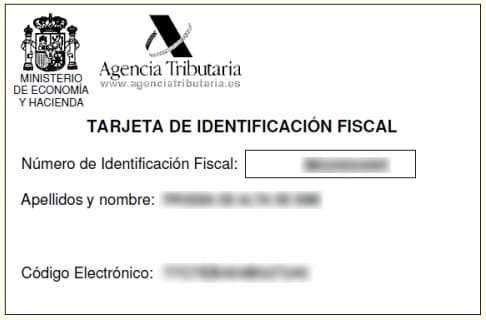
The NIE is mandatory to sign any official property documents in Spain.
We offer two options:
-
Schedule an appointment at the Spanish consulate nearest to you. We’ll provide all pre-filled paperwork.
-
Or, obtain your NIE via a power of attorney signed during your visit to Spain.
We strongly recommend signing a power of attorney during your first visit (cost: under €150, covered by the buyer).
Email Communication is Critical
Some of our emails may be filtered into your spam or junk folders. Please check these regularly and mark them as safe to ensure you don’t miss any essential updates.
Our emails contain essential information (property listings, legal updates, important documents, etc.).
They may sometimes end up in your spam or junk folders.
📩 Please check these folders regularly and mark our emails as safe to ensure you receive everything needed for your purchase.
A Fast-Moving Market
The Spanish property market moves quickly.
If you’re not ready to move forward within 2 weeks, we recommend pausing your mandate (free of charge). It can be extended later under the same conditions.
📵 If we don’t hear from you for over 2 weeks, your mandate will be cancelled automatically and cannot be reactivated.
Buying Through a Company (SCI or Equivalent)
Purchasing through a company may take an additional 1 to 1.5 months, due to:
-
Apostille of documents by a court in your home country (timing is unpredictable)
-
Sworn legal translations into Spanish
These steps involve additional legal costs, which are the buyer’s responsibility.
You’ll also need:
-
A Spanish company tax number (NIF)
-
An apostilled certificate of incorporation translated into Spanish
SpainEasy Support can assist with both the NIF application and the certified translation process.
Buying Alone While Married: What You Need to Know
In Spain, it is legally possible to buy property in your name only, even if you are married.
However, your marital regime determines how ownership is handled:
1. Community Property
Common in Spain and some other countries.
-
Any property purchased during the marriage is considered jointly owned (50/50), even if only one spouse signs the deed.
-
If one spouse wants to waive their rights, they must travel to Spain and sign a declaration before a notary.
-
Property bought before marriage or with personal funds may be considered separate.
2. Separation of Property
A regime where spouses keep assets separately.
-
Property is personally owned if purchased with your own funds and this is stated in the deed.
-
Your spouse has no legal claim, unless shared money was used.
3. Participation in Acquests
Used in countries like Belgium, Switzerland or Luxembourg.
You can purchase property in your name, but if you divorce, your spouse may claim a share of the increase in value gained during the marriage.
4. Universal Community Property
All assets are shared, regardless of when they were acquired.
-
You cannot buy property alone under this regime — your spouse is automatically a co-owner.