

Step 4 – Final Signing with the Notary & Opening Your Spanish Bank Account
Identification Documents
Please bring your original, valid identification documents.
-
A passport is preferred for signing the official deed at the notary. Ensure it is valid.
-
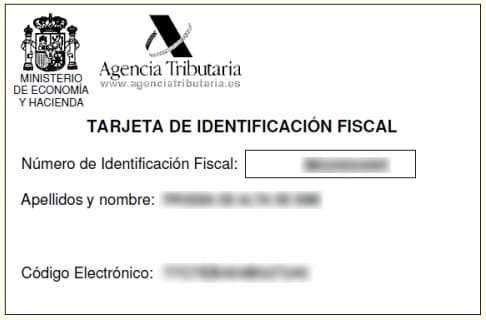
Your NIE (Foreigner Identification Number) is mandatory for the signing.
If your NIE is still pending, our after-sales team can provide a temporary Spanish tax number (NIF) within 72 hours (optional paid service).
The official NIE must still be submitted within 3 weeks of signing.
Anti-Money Laundering Law (AML)
To launch your property search efficiently, we need the following documents:
Under European anti-money laundering laws, Spanish banks must verify the source of funds for all transactions, whether you’re paying in cash or using a mortgage.
You will need to provide documentation showing where the money comes from, such as:
-
Personal savings
-
Inheritance or gifts
-
Loans
Accepted documents may include:
-
Bank statements
-
Loan or gift agreements
-
Proof of transfers
-
Any official record tracking the origin of the funds
Failure to provide the required documents in time may result in the funds being blocked and returned to the original account within 10 days.
To avoid delays or complications, we recommend preparing these documents well in advance.
Opening a Spanish Bank Account
Make sure that all decision-makers are present during the visits.
The Spanish market moves quickly — if a decision is delayed, the opportunity might be lost.
Opening a non-resident bank account is required for:
-
Setting up utilities (electricity, water, etc.)
-
Paying local property taxes
You may expect low monthly maintenance fees depending on the bank.
Documents required:
For all applicants:
-
Last two annual tax returns
If employed:
-
Last three payslips
If self-employed:
-
Last two balance sheets
-
Last two income declarations
If you have other sources of income:
-
Supporting documents as proof
For Swiss and non-EU nationals:
-
FICP certificate (can be requested online)

Home Insurance
We strongly recommend subscribing to a home insurance policy through your Spanish bank.
This typically covers damage from fire, water leaks, and other incidents.
In many cases, bundling insurance with your account will also reduce monthly banking fees.
Notary Fund Provision
This is not a fixed cost but a provision to cover expenses such as:
-
Registration of the new owner
-
Legal and administrative processing (land registry, certificates, etc.)
Within 3 to 8 months after the notary appointment, actual invoices will be issued. If:
-
Costs are lower than the provision → you’ll be refunded the difference
-
Costs exceed the provision → you’ll be asked to cover the balance
After the Notary Signing: What Happens Next?
You’ll receive a simple copy of the signed deed (escritura). This document will be used for your post-purchase administrative tasks.
Next steps include:
-
Payment of taxes
Depending on the type of property (new or resale), you will need to pay the corresponding taxes, such as VAT, transfer tax, or registration duties. -
Registration with the Land Registry
Once the taxes have been paid, the deed is sent to the Land Registry (Registro de la Propiedad) so the property can be officially registered in your name. -
Delivery of the final deed
After registration, which may take a few months, you will receive the registered authentic deed, meaning your final title of ownership.
Important Notes
-
Please note that we are completely dependent on the Spanish State for the issuance of the final authentic deeds.
-
These timelines are beyond our control, and there is no possible way to speed up the process.
-
In some cases, it may take more than 10 months.
-
If you purchased with a mortgage, the bank or the notary’s administrative service usually handles the entire process.